Travel and Holidays
Getting Started
Look at the pictures and talk about them.
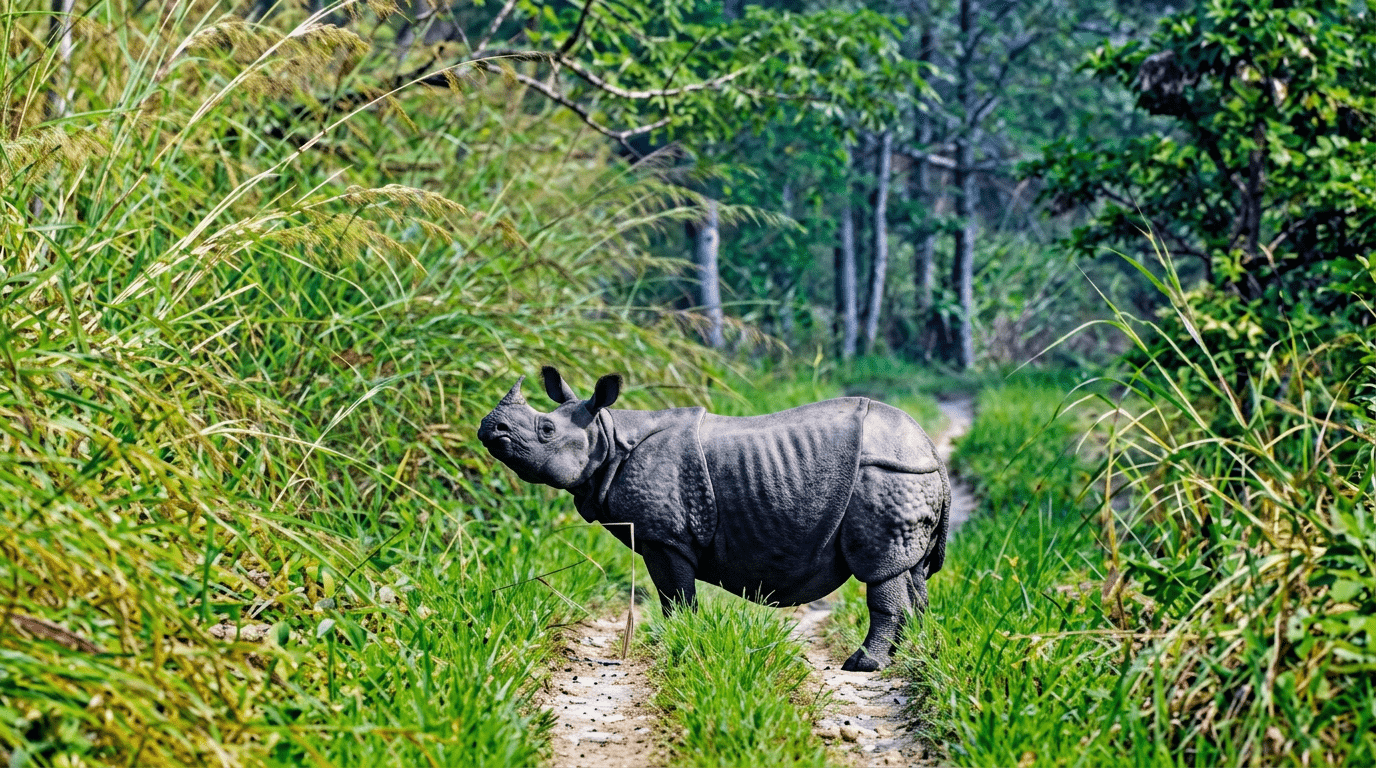
This picture shows a rhinoceros standing in a forest or grassland area. It is a wild animal and looks strong and powerful.

This picture shows the city of Dubai at night with the famous Burj Khalifa. The city looks modern, bright, and beautiful.
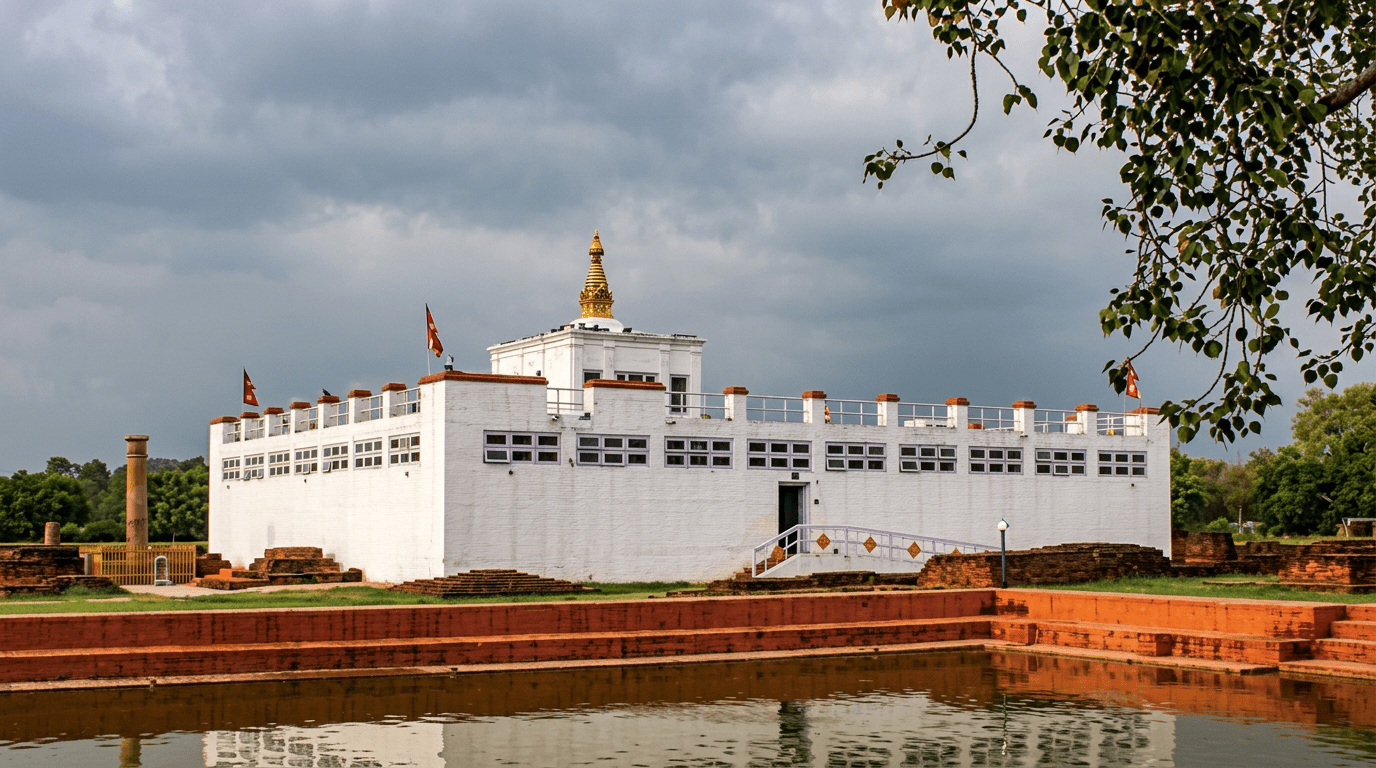
The third picture shows Lumbini, the birthplace of Lord Buddha. It is a peaceful and religious place in Nepal.
The fourth picture shows the famous Taj Mahal in India. It is one of the most beautiful monuments in the world and is a symbol of love.
Reading I
a. What do you think the man in the picture is doing?
Answer: I think the man in the picture is meditating or relaxing in a peaceful place in the mountains.
b. Are you planning to travel or go on a holiday this year?
Answer: Yes, I am planning to go on a holiday this year. I would like to visit a beautiful and quiet place to relax and enjoy nature.
Poon Hill Yoga Trek in Nepal
A. Match the words in column A with their meanings in column B.
Column A Column B
a. magnificent i. charming
b. glaciers ii. surprised; amazed
c. hotspot iii. plants and animals
d. astonished iv. throughout the entire year
e. enchanting v. rivers of ice
f. flora and fauna vi. extremely attractive and impressive
g. perennial vii. a place of significant activity
Answers
a. magnificent — vi. extremely attractive and impressive
b. glaciers — v. rivers of ice
c. hotspot — vii. a place of significant activity
d. astonished — ii. surprised; amazed
e. enchanting — i. charming
f. flora and fauna — iii. plants and animals
g. perennial — iv. throughout the entire year
B. Circle the correct answer.
a. What are the visitors expected to achieve the most in this package holiday?
i. enjoyment of panoramic views of mountain and landscapes
ii. plenty of physical activity in the lap of nature
iii. self-transformation with Yoga in serene hill stations
b. What will the visitors do on the first day of their tour?
i. go to Pokhara ii. discuss the programme iii. practise Yoga for an hour
c. Where will they stay on the fourth day?
i. at Tikhedhunga ii. at Banthanti iii. at Ghorepani
d. What is the destination of the visitors on the sixth day?
i. Ghorepani ii. Tadapani iii. Deurali
e. Which place will the tourists visit last as a part of the package?
i. Ghandruk ii. Nayapul iii. Pokhara
Answer:
B. Circle the correct answer.
a. What are the visitors expected to achieve the most in this package holiday?
iii. self-transformation with Yoga in serene hill stations
b. What will the visitors do on the first day of their tour?
ii. discuss the programme
c. Where will they stay on the fourth day?
ii. at Banthanti
d. What is the destination of the visitors on the sixth day?
ii. Tadapani
e. Which place will the tourists visit last as a part of the package?
i. Ghandruk
C. Answer the following questions.
a. List any two advantages of the Yoga trek in the Nepali hilly region.
The list of two advantages of the Yoga trek in the Nepali hilly region are:
i. It improves physical and mental health through Yoga and meditation.
ii. It helps visitors enjoy the beautiful Himalayan landscapes and experience Nepali culture.
b. Who can take part in this Yoga trek programme?
This programme is open for all experience levels, so anyone interested in Yoga, trekking, and exploring Nepali culture can take part.
c. What would you enjoy the most in Ghandruk if you were one of the visitors? Why?
I would enjoy the close-up views of Annapurna South and Machhapuchhre Himalayas and exploring the Gurung village, because it offers stunning mountain scenery and a chance to experience the unique ethnic culture of Nepal, including the famous Gorkha heritage.
d. How many days do the visitors do Yoga during the programme?
Visitors do Yoga on five days (Day 3, 4, 5, 6, and 7).
e. How is the Yoga hour mainly managed every day on this holiday trek?
The Yoga hour is mainly done in the morning (after tea and before breakfast) as a daily routine, and sometimes also in the evening at certain stops during the trek.
D. Have you ever been on a holiday trip or travelled to different places? Mention the hotspots, points of interest, etc. Share your experiences with your friends.
Yes, I have travelled to different places on holiday with my family. One of my most memorable trips was to Pokhara in Nepal. It is famous for its beautiful lakes and mountain views. We visited Phewa Lake, where we enjoyed boating and saw reflections of the Annapurna range on the water. The peaceful environment and fresh air made it very relaxing.We also went to the World Peace Pagoda, which gave a stunning panoramic view of the city and mountains. Another highlight was visiting the Davis Falls and Gupteshwor Cave, which were very exciting natural attractions.In addition, I enjoyed walking around the lakeside area, trying Nepali food, and watching the sunset over the mountains. Overall, it was a wonderful experience filled with natural beauty, adventure, and cultural discovery.
Pronunciation
wonderful
destination
opportunity
unimaginable
likelihood
inspirational
responsibility
astonishing
magnificently
autobiography
insignificant
biodiversity
[Note: Click on the word to listen real pronunciation.]
Grammar I
Understanding Future Tenses in English Grammar (Will, Going to, and Present Continuous)
Talking about the future in English is not as simple as using just one form like “will.” English uses different structures depending on intention, planning, timing, and certainty. In this guide, we’ll explore three important ways to express the future: “will,” “be going to,” and the present continuous tense.
1. Using “Will” – Spontaneous Decisions and Predictions
We use “will” when we decide something at the moment of speaking. It is not planned in advance. It is often used for quick decisions, offers, promises, and general predictions.
When to use “will”:
Instant decisionsOffers and promisesPredictions without strong evidence
Examples:
I’m thirsty. I will open a window.
Don’t worry, I will help you.
The bus will arrive soon.
Words like I think, probably, or I’m sure often go with “will.”
2. Using “Be Going To” – Plans and Intentions
We use “be going to” when something is already planned or decided before speaking. It is also used when there is clear evidence that something will happen.
When to use “going to”:Planned actionsFuture intentionsPredictions based on evidence
Examples:
I am going to open a bank account.
She is going to study medicine.
The sky is dark. It is going to rain.
If you already made a decision earlier, use “going to.”
3. Using Present Continuous – Fixed Arrangements
The present continuous tense is used for future events that are already arranged or scheduled. These are usually fixed plans with time or place mentioned.
When to use present continuous:Fixed appointmentsSocial arrangementsScheduled future events
Examples:
I am meeting Jane at 8 o’clock.
We are having a party next Saturday.
I am visiting my grandparents next week.
If the plan is already fixed with others, use present continuous
4. Exam Tip
To choose the correct form, ask yourself:
Did I decide just now? → Will
Did I plan it earlier? → Going to
Is it already arranged? → Present continuous
Final Thought: Mastering future forms helps you speak and write English more naturally. Instead of using only “will,” learning the differences will make your communication clearer and more accurate.
A. Study the following sentences.
a. A: Did you call your mother?
B: Oops, I’ve forgotten! I’ll do it right now.
b. I can't decide what to wear tonight. I think I'll wear my pink saree.
c. The bus will arrive here soon.
d. They have bought a lot of chocolates. They are going to have a party.
e. The sky is overcast. It is going to rain.
f. I'm meeting Jane at 8 o'clock on Saturday.
g. A: We're having a party next Saturday. Would you like to come?
B: I'd love to, but I'm quite busy that day.
h. I’m visiting my grandparents next week.
i. Are you doing anything interesting this weekend?
A. Study the following sentences (Answers/Explanation)These sentences show different ways of talking about the future:
a. “I’ll do it right now.” → Instant decision (will)
b. “I think I’ll wear my pink saree.” → Spontaneous decision (will)
c. “The bus will arrive here soon.” → Prediction (will)
d. “They are going to have a party.” → Planned intention (going to)
e. “It is going to rain.” → Prediction based on evidence (going to)
f. “I’m meeting Jane at 8 o’clock on Saturday.” → Fixed arrangement (present continuous)
g. “We’re having a party next Saturday.” → Fixed plan (present continuous)
h. “I’m visiting my grandparents next week.” → Planned arrangement (present continuous)
i. “Are you doing anything this weekend?” → Future arrangement inquiry (present continuous)
B. Choose the correct answer to complete the following sentences.
a. It's really hot here.............. a window.
i. I’ll open ii. I’m opening
b. I don't have a bank account....................... an account in Nepal BankLtd.
i. I’ll open ii. I’m going to open
c. A: Would you take tea or coffee?
B:................... a coffee, please.
i. I’ll have ii. I’m going to have
d. I've decided that ……… to the class teacher about my family situation.
i. I’ll speak ii. I’m going to talk
e. Next week, we....................... on lake Rara.
i. will boat ii. will be boating
f. I would love to go out with you tomorrow but..................... dinnerwith Dolma.
i. I’ll have ii. I’m having
g. I can't come to class next Monday..................... a tooth taken out.
i. I’ll have ii. I’m having
B. Choose the correct answer
a. It’s really hot here. ___ a window.
i. I’ll open
b. I don’t have a bank account. ___ an account in Nepal Bank Ltd.
ii. I’m going to open
c. Would you take tea or coffee?
i. I’ll have a coffee
d. I’ve decided that ___ to the class teacher about my family situation.
ii. I’m going to talk
e. Next week, we ___ on lake Rara.
ii. will be boating
f. I would love to go out with you tomorrow but ___ dinner with Dolma.
ii. I’m having
g. I can’t come to class next Monday ___ a tooth taken out.
ii. I’m having
Writing I
Imagine that you are going on a three-day trek during your vacation. What will you do on different days? Write short paragraphs about your plans.
Three-Day Trek to Poon Hill
During my vacation, I am planning to go on a three-day trek to Poon Hill with my friends. I have always wanted to visit this beautiful place because it is famous for its natural beauty, green hills, and stunning mountain views. I am very excited about this adventure because it will give me a chance to enjoy nature and spend quality time with my friends.
First Day
On the first day, we will leave home early in the morning and travel to the starting point of the trek. After reaching there, we will begin walking through forests filled with rhododendron trees and small villages. We will meet local people and learn about their culture and lifestyle. During the trek, I will take photographs of rivers, hills, and waterfalls. In the evening, we will reach a small lodge where we will have dinner and rest for the night. I think the fresh and peaceful environment will make me feel relaxed and happy.
Second Day
On the second day, we will wake up early and continue our journey towards higher hills. The path may be difficult at some places, but I will enjoy the adventure and challenge. Along the way, we will see beautiful mountains covered with snow and hear the sounds of birds and flowing streams. We will stop for lunch at a teahouse and take some rest before continuing our trek. In the evening, we will sit together, share stories, sing songs, and enjoy the cold weather. I will also try local foods and learn more about the traditions of the area.
Third Day
On the final day, we will wake up before sunrise and hike to the viewpoint to watch the beautiful sunrise over the Himalayas. The golden rays of the sun shining on the snowy mountains will be an unforgettable sight. After taking pictures and enjoying the scenery, we will begin our return journey. Before leaving, I will buy some local souvenirs to remember the trip. Finally, we will travel back home safely with wonderful memories, new experiences, and a refreshed mind. This trek will be one of the most exciting and memorable experiences of my vacation.
Reading II
Look at the picture below and answer the questions.
a. Where do you think the man in the picture is?
I think the man in the picture is in a snowy forest or mountain area during winter.
b. Why do you think he has stopped there?
I think he has stopped there to take some rest because he looks tired after travelling through the snow with his horse.
Stopping by Woods on a Snowy Evening
This poem is “Stopping by Woods on a Snowy Evening” by Robert Frost. It looks simple, but it has a deep meaning.
🌲 What happens in the poem (simple explanation)
The speaker stops his horse near a quiet forest on a snowy evening. He watches the woods fill with snow. It is very peaceful and beautiful. But then he remembers he still has duties to finish, so he continues his journey.
🧠 Line-by-line meaning (easy version)
1. “Whose woods these are I think I know…”
The speaker thinks he knows who owns the woods, but the owner lives in a village and is not around.
2. “He will not see me stopping here…”
The owner won’t notice him stopping to watch the snow.
3. “To watch his woods fill up with snow.”
He is enjoying the peaceful snowfall in the forest.
4. “My little horse must think it queer…”
His horse finds it strange that they stopped here.
5. “Between the woods and frozen lake…”
They are in a lonely, cold place with no houses nearby.
6. “The darkest evening of the year.”
It is very late, cold, and dark (possibly winter solstice).
7. “He gives his harness bells a shake…”
The horse shakes its bells, as if asking why they stopped.
8. “The only other sound’s the sweep…”
The only sound is wind and soft falling snow (“downy flake” = very soft snowflakes).
9. “The woods are lovely, dark and deep…”
The forest is beautiful, quiet, and mysterious. The speaker feels drawn to it.
10. “But I have promises to keep…”
He remembers his responsibilities and commitments in life.
11. “And miles to go before I sleep…”
He still has a long journey and many duties before he can rest.
⭐ Main theme (important idea)
The poem is about:
- Nature’s beauty vs. human responsibilities
- The attraction of peace and escape
- But also the need to continue life duties
🧾 Simple summary
The speaker enjoys a quiet snowy forest, but he cannot stay because he has responsibilities. He chooses duty over peaceful rest.
A. Find the words from the text that match the following meanings.
Meaning | Word from the poem |
a. an area of trees, smaller than a forest | woods |
b. strange or unusual | queer |
c. the main house on a farm, usually where the farmer lives | farmhouse |
d. a set of leather and metal pieces that is put around the body of a horse | harness |
e. movement of the air | wind |
f. covered in something very soft | downy (as in “downy flake”) |
B. Choose the correct answer.
a.Why does the speaker stop while on the journey?
i.to watch the woods filled up with snow
(“To watch his woods fill up with snow.”)
ii.to find food for his or her horse
iii.to say hello to the owner of the woods
iv.to go skating on a frozen lake
b. What is the setting of the poem?
i. the woods on a bright, snowy afternoon
ii. a village on a dark, snowy evening
(“The darkest evening of the year.”)
iii. a frozen lake on a bright, snowy afternoon
iv. the woods on a dark, snowy evening
c. Which one of the following statements is true?
i. The woods are far away from the village.
(“His house is in the village though” implies the woods are distant from it.)
ii. The woods are near some houses.
iii. The owner of the woods and speaker are friends.
iv. The speaker of the poem does not like the owner of the woods.
d. How did the horse respond when the speaker stopped there?
i. stood calm ii. did nothing
iii. shook its harness iv. asked the speaker a question
(“He gives his harness bells a shake / To ask if there is some mistake.”)
e. What does ‘miles to go before I sleep’ mean?
i. The speaker feels tired and sleepy.
ii. The speaker has lots of desires to fulfill.
iii. The speaker has lots of responsibilities to fulfill.
(It is a metaphor for duties and obligations before rest/death.)
iv. The speaker has a long distance to travel.
C. Fill in the gaps with appropriate words from the box to complete the summary of the poem.
promises traveller journey death the woods destination
The poet compares human life with a journey. The speaker of the poem is a traveller. He has to reach his destination before taking a rest. However, he is distracted by the momentary pleasure in the form of the woods. His companion, the horse, reminds him of his promises in life. The speaker realises that he has to fulfill many responsibilities before his death.
C. Recall a journey you have recently made. Who accompanied you on the journey? Did you enjoy it? Compose a short poem about it.
A Journey to Pokhara
With my parents by my side,
To Pokhara, we did ride.
Devi’s Falls roared loud and grand,
Nature’s magic close at hand.
Fewa Lake so calm and still,
Boats reflecting every hill.
We walked through streets and temples old,
More precious stories than can be told.
Each place we saw, each step we took,
Was like a page from a happy book.
Did I enjoy? Oh, yes, so true—
The best part? Being there with you (my parents).
Listening
A. Look at the picture and guess the answers to the following
a. Who is the lady?
b. Who is she talking to?
c. What is she talking about?
Transcription from the Audio for HotelReservation
Hotel Room Reservation Telephone Conversation
Receptionist: Hello, Sunny Side Inn. May I help you?
Caller: Yes, I’d like to reserve a room for two on the 21st of March.
Receptionist: Okay. Let me check our computer here for a moment. Okay, the 21st of May, right?
Caller: No, March, not May.
Receptionist: Oh, sorry. Let me see here.
Caller: Are you all booked that night?
Receptionist: Well, we have one suite available, complete with a kitchenette and sauna bath.
Caller: Okay.
Receptionist: And the view of the city is great, too.
Caller: How much is that?
Receptionist: It’s only $200 plus a 10% room tax.
Caller: Oh, that’s a little too expensive for me. Do you have a cheaper room available, either on the 20th or the 22nd?
Receptionist: Well, would you like a smoking or non-smoking room?
Caller: Non-smoking, please.
Receptionist: Okay. We do have a few rooms available on the 20th. We’re full on the 22nd, unless you want a smoking room.
Caller: Well, how much is the non-smoking room on the 20th?
Receptionist: $80 plus the 10% room tax.
Caller: Okay, that’ll be fine.
Receptionist: All right. Could I have your name, please?
Caller: Yes, it’s Bob Maxner.
Receptionist: How do you spell your last name, Mr. Maxner?
Caller: It’s M-A-E-X-N-E-R.
Receptionist: Okay. Mr. Maxner, we look forward to seeing you on March 20th.
Caller: Okay. Goodbye.
B. Listen to the audio and fill in the gaps with suitable words.
a. The name of the hotel is Sunny Side Inn.
b. The $200 room is quite expensive for the customer.
c. All the non-smoking rooms are full on 22nd March.
d. The non-smoking room costs $80.
e. The customer finally books the room for 20th March.
C. Where do you often spend nights when you are away on a visit or holidays? How do you or would you make a reservation if you have to stay in a hotel? Share your ideas with your friends.
When I am away on a visit or holiday, I usually stay in a hotel or sometimes in a guesthouse, depending on my budget. If I travel with family, I prefer staying in a comfortable hotel with good facilities. If I travel alone, I might choose a cheaper hotel or a hostel.
To make a reservation, I usually book online through hotel websites or apps like Booking.com or Agoda. I compare prices, read reviews, and check the location before confirming the booking. If necessary, I can also call the hotel directly to ask about room availability, prices, and special offers. After choosing the room, I provide my details and confirm the reservation.
Grammar II
A. Use the correct form of the verbs given in the brackets to com- plete the sentences.
a. As per the schedule, the train…………………………….. (leave) at 3 o’clock.
Answer: As per the schedule, the train leaves at 3 o’clock.
b. Look, that aeroplane is looking shaky! It…………………………………. (crash).
Answer: Look, that aeroplane is looking shaky! It is going to crash.
c. My daughter says she……………………. (be) a doctor when she is older.
Answer: My daughter says she will be a doctor when she is older.
d. Tomorrow……………………………………. (be) a sunny day, according to the weather forecast.
Answer: Tomorrow will be a sunny day, according to the weather forecast.
e. A: What……………………….. (do) tomorrow evening?
B: Nothing special. I think I…………………………….. (stay) at home.
Answer: A: What are you doing tomorrow evening?
B: Nothing special. I think I will stay at home.
f. It’s very stuffy here. Don’t worry, I ………………..… (open) the windows for you.
Answer: It’s very stuffy here. Don’t worry, I will open the windows for you.
g. Ann is driving. There is very little petrol left in the tank. The nearest petrol station is a long way from here. She …… (run) out of petrol.
Answer: Ann is driving. There is very little petrol left in the tank. The nearest petrol station is a long way from here. She is going to run out of petrol.
h. There is a hole in the bottom of the boat. It is filling up with water quickly. It… (sink).
Answer: There is a hole in the bottom of the boat. It is filling up with water quickly. It is going to sink.
Here is the complete, properly written grammar guide for all future forms, including additional conditions and uses beyond the sentences in your original exercise.
Complete Grammar Rules for Future Forms
A. SIMPLE PRESENT (for future meaning)
Uses / Conditions:
B. PRESENT CONTINUOUS (for future meaning)
Uses / Conditions:
❌ Not used for:
C. “BE GOING TO” + INFINITIVE
Uses / Conditions:
Additional Conditions:
Used when there is present proof (not just opinion)
Cannot be used with verbs like promise, offer, suggest (use will instead)
Common with look, watch out, be careful, can you see?
Compare:
D. “WILL” + INFINITIVE
Uses / Conditions:
Additional Conditions for will:
Use will when there is no prior plan
Use will after probably, definitely, certainly
Use will for willingness (I will carry that bag for you)
Use will not / won’t for refusal or prediction of non-occurrence
E. “SHALL” (special case, formal British English)
F. FUTURE PERFECT & FUTURE CONTINUOUS (additional conditions)
Future Continuous (will be + -ing)
Future Perfect (will have + past participle)
G. “BE TO” + INFINITIVE (formal / official future)
H. “BE ABOUT TO” + INFINITIVE
I. “BE DUE TO” + INFINITIVE
Complete Comparison Table (All Conditions)
PRACTICE EXERCISES
Exercise A: SIMPLE PRESENT (for future meaning)
A1. Timetables & schedules – Fill in the blanks with the correct present simple form.
The train to London ________ (leave) at 5:30 pm tomorrow.
The last bus ________ (arrive) at the station at 11:15 pm.
The morning class ________ (start) at 8 am sharp on Monday.
The movie ________ (finish) at 9:45 pm tonight.
The flight to New York ________ (depart) from Gate 12.
The art exhibition ________ (open) next Friday at 10 am.
The school bell ________ (ring) at 3:30 pm every day including tomorrow.
The next train to Manchester ________ (stop) at all local stations.
The evening show ________ (begin) at 7 pm.
The ferry ________ (dock) at the harbour at 6 am tomorrow.
A2. Future time clauses – Complete the sentences using the correct form of the verb (present simple after time conjunctions).
I will call you as soon as I ________ (reach) home.
Please wait here until the doctor ________ (see) you.
We will go out for dinner after the meeting ________ (end).
She will text me when she ________ (land) at the airport.
Once the rain ________ (stop), we will leave.
Before you ________ (leave), lock all the doors.
He will not start eating until everyone ________ (arrive).
When the temperature ________ (drop) below zero, the roads freeze.
As soon as the lights ________ (go) green, drive carefully.
After she ________ (finish) her degree, she will look for a job.
A3. Conditional clauses (if/unless/in case) – Fill in the blanks.
If it ________ (rain) tomorrow, we will cancel the picnic.
Unless you ________ (hurry), you will miss the bus.
In case the train ________ (be) late, I will take a taxi.
If she ________ (call), tell her I am in a meeting.
Unless they ________ (pay) by Friday, we will cancel the order.
If he ________ (not/study), he will fail the exam.
In case of emergency, please ________ (stay) calm.
Unless we ________ (leave) now, we will be late.
If you ________ (touch) that wire, you will get shocked.
In case I ________ (not/return) by 6 pm, start without me.
Exercise B: PRESENT CONTINUOUS (for future meaning)
B1. Personal arrangements – Fill in the blanks with present continuous.
I ________ (meet) my friend at 7 pm at the café.
We ________ (have) dinner with our neighbours tomorrow evening.
She ________ (see) the dentist on Thursday morning at 9 am.
They ________ (play) tennis at the sports club on Saturday.
He ________ (attend) a business conference in Dubai next week.
My parents ________ (visit) us for the weekend.
I ________ (have) lunch with Sarah tomorrow afternoon.
We ________ (watch) a play at the theatre on Friday night.
She ________ (travel) to Paris next Monday.
They ________ (stay) at the Grand Hotel during their trip.
B2. Plans with specific details – Complete the sentences.
We ________ (fly) to Tokyo on Monday at 9 am.
I ________ (stay) at the Marriott Hotel on 5th Avenue.
She ________ (give) a presentation in Conference Room B at 2 pm.
They ________ (launch) the new smartphone on July 15th.
He ________ (cook) dinner for twelve guests tomorrow night.
The CEO ________ (announce) the results at the press conference.
I ________ (pick) you up from the station at 6 pm exactly.
We ________ (discuss) the budget in the boardroom at 10 am.
She ________ (interview) three candidates on Wednesday.
They ________ (renovate) their kitchen for two weeks starting Monday.
B3. Questions about arrangements – Write questions using present continuous.
(you / do / tomorrow evening) → _______________________________________
(where / they / stay / in London) → _______________________________________
(when / she / come / back) → _______________________________________
(you / attend / the meeting on Tuesday) → _______________________________________
(who / pick / you / up from the airport) → _______________________________________
(what time / he / arrive) → _______________________________________
(how many people / come / to the party) → _______________________________________
(where / you / spend / your holiday) → _______________________________________
(she / join / us for dinner) → _______________________________________
(they / move / to the new office next month) → _______________________________________
Exercise C: “BE GOING TO” + INFINITIVE
C1. Prediction based on present evidence – Complete using “going to”.
Look at those black clouds! It ________ (rain) very soon.
That car is driving at 160 km/h. It ________ (crash) into the barrier.
She hasn’t eaten anything all day. She ________ (faint) any moment.
The baby is crying loudly. He ________ (wake up) the whole house.
He is holding that glass on the edge of the table. It ________ (fall) off.
The sky is getting darker and darker. There ________ (be) a storm.
The toddler is walking towards the swimming pool. He ________ (fall) in.
That ladder looks unstable. The man on it ________ (fall) down.
The laptop battery is at 1%. It ________ (shut down) any second.
The balloon is inflating too much. It ________ (burst).
C2. Prior plan / intention – Complete using “going to”.
I bought some paint yesterday. I ________ (paint) my bedroom this weekend.
She has applied to medical school. She ________ (become) a doctor.
We have saved money for three years. We ________ (buy) a new house.
He bought a plane ticket to Paris. He ________ (propose) to his girlfriend.
They have been training for six months. They ________ (run) a marathon.
I have quit my job. I ________ (start) my own business.
She has enrolled in a language course. She ________ (learn) Chinese.
We have reserved a table. We ________ (celebrate) our anniversary there.
He has bought a ring. He ________ (propose) on Valentine’s Day.
They have registered for classes. They ________ (study) nursing.
C3. Future result of present situation – Complete using “going to”.
There is very little petrol left in the tank. She ________ (run out) of petrol.
There is a large hole in the bottom of the boat. It ________ (sink).
He hasn’t opened his textbook all semester. He ________ (fail) the exam.
The fridge is completely empty. We ________ (starve).
The company has lost money for five years. It ________ (close down).
She has been coughing and sneezing all day. She ________ (get sick).
He has gained 20 kg and never exercises. He ________ (have) health problems.
The bridge is shaking in the wind. It ________ (collapse).
The baby has been crying for two hours. She ________ (fall asleep) from exhaustion.
They haven’t watered the plants for weeks. The plants ________ (die).
C4. Statements of personal intention – Complete using “going to”.
I ________ (learn) Spanish next year.
She ________ (quit) her job after she gets her bonus.
We ________ (adopt) a dog from the animal shelter.
He ________ (ask) his boss for a raise tomorrow.
They ________ (build) a house on that plot of land.
I ________ (write) a novel before I turn 30.
She ________ (travel) to all seven continents.
We ________ (save) 20% of our income every month.
He ________ (run) for political office in the next election.
They ________ (volunteer) at the local food bank.
Exercise D: “WILL” + INFINITIVE
D1. Instant / spontaneous decisions – Complete using “will”.
The phone is ringing. I ________ (answer) it.
I am feeling thirsty. I think I ________ (get) a glass of water.
This suitcase is extremely heavy. I ________ (help) you carry it.
The soup needs more flavour. I ________ (add) some salt.
Someone is knocking at the door. I ________ (go) and see who it is.
You look tired. I ________ (make) you a cup of coffee.
That shirt looks good on you. I ________ (buy) it.
I forgot to bring my pen. I ________ (borrow) yours if you don’t mind.
The room is dark. I ________ (turn on) the light.
You seem lost. I ________ (show) you the way to the station.
D2. Offers, promises, threats, requests – Complete using “will” or “won’t”.
It’s very stuffy in this room. I ________ (open) the window for you. (offer)
I promise I ________ (call) you every single day. (promise)
If you cheat on the test again, I ________ (tell) the principal. (threat)
________ you please ________ (pass) me the salt? (request)
I ________ (never / lie) to you again. (promise)
Don’t worry about the dishes. I ________ (wash) them. (offer)
If you don’t stop talking, I ________ (send) you out of the class. (threat)
________ you ________ (help) me move this table? (request)
I ________ (always / love) you. (promise)
The door is stuck. It ________ (not / open) no matter what. (refusal)
D3. Predictions based on opinion / belief – Complete using “will” or “won’t”.
I think it ________ (snow) tomorrow, but I’m not completely sure.
She ________ (probably / arrive) late because she is always behind schedule.
He ________ (not / get) the job. He lacks the necessary experience.
They ________ (definitely / win) the championship. They are the strongest team.
I believe prices ________ (go up) again next month.
You ________ (love) this restaurant. The food is excellent.
She ________ (not / pass) the exam. She didn’t study at all.
I doubt he ________ (come) to the party. He is very busy.
The company ________ (probably / announce) layoffs next week.
We ________ (be) late if we don’t leave immediately.
D4. Predictions based on forecast / news – Complete using “will”.
Tomorrow ________ (be) a sunny day, according to the weather forecast.
The news reported that the Prime Minister ________ (resign) tomorrow.
The economic report predicts that inflation ________ (rise) by 1.5%.
The weatherman said it ________ (be) cloudy with a chance of rain.
The announcement stated that the store ________ (open) at 9 am on weekdays.
According to experts, sea levels ________ (rise) significantly by 2050.
The schedule says the train ________ (depart) from platform 4.
The doctor said the patient ________ (recover) fully in two weeks.
The newspaper claims taxes ________ (increase) next fiscal year.
The space agency announced that the rocket ________ (launch) on Thursday.
D5. After verbs of thinking/expecting – Complete using “will”.
I think I ________ (stay) at home tonight and watch a movie.
She hopes she ________ (pass) the driving test on her first attempt.
We expect the delivery ________ (arrive) by Friday afternoon.
I am sure you ________ (enjoy) the concert. The band is fantastic.
He is afraid he ________ (miss) the last train if he doesn’t hurry.
I believe we ________ (find) a solution to this problem.
She doubts she ________ (finish) the project on time.
We hope it ________ (not / rain) on our wedding day.
I am certain they ________ (succeed) in their mission.
He expects she ________ (say) yes to his proposal.
Exercise E: “SHALL”
Complete using “shall” or “will” appropriately.
________ we go for a walk in the park?
________ I make some fresh coffee for everyone?
I ________ return your book by tomorrow. (formal promise)
________ we begin the meeting now?
________ I carry that heavy bag for you?
We ________ overcome all obstacles. (formal statement)
________ we order pizza or pasta for dinner?
I ________ never forget your kindness. (formal)
________ I book the tickets online right now?
________ we take a short break and continue in ten minutes?
Exercise F: FUTURE CONTINUOUS
F1. Action in progress at a specific future time – Complete using future continuous.
At 8 pm tomorrow, I ________ (drive) home from work.
This time next week, she ________ (lie) on a beach in Thailand.
At 10 am on Monday, they ________ (take) their final exam.
When you arrive at the station, I ________ (wait) for you at the entrance.
Don’t call me at 9 pm. I ________ (watch) my favourite TV show.
At midnight tonight, we ________ (celebrate) the New Year.
This time tomorrow, he ________ (fly) over the Atlantic Ocean.
When the teacher walks in, the students ________ (talk) loudly as usual.
At 6 am tomorrow, I ________ (run) in the park.
During the summer break, she ________ (travel) across Europe.
F2. Polite questions about plans – Complete using future continuous.
________ you ________ (use) the car tomorrow afternoon?
________ you ________ (attend) the annual conference in March?
________ she ________ (come) to the team meeting at 2 pm?
________ they ________ (stay) at the same hotel as last year?
________ you ________ (need) anything else from the store, sir?
________ he ________ (work) from home again tomorrow?
________ we ________ (have) a break at 11 am as usual?
________ the shop ________ (be) open at this time on Sunday?
________ you ________ (drive) past the post office on your way home?
________ the children ________ (sleep) when we arrive late at night?
Exercise G: FUTURE PERFECT
G1. Action completed before a specific future time – Complete using future perfect.
By next week, I ________ (finish) writing the report.
She ________ (graduate) from university by June.
They ________ (build) the new bridge by 2027.
He ________ (save) enough money to buy a car by December.
We ________ (eat) dinner before the movie starts.
By the time you wake up, I ________ (already / leave) for work.
She ________ (complete) her third novel by the end of the year.
They ________ (renovate) the entire house by next month.
He ________ (visit) 50 countries by the time he turns 40.
The company ________ (launch) three new products by 2026.
G2. Assumption about a past action – Complete using future perfect.
You ________ (hear) the breaking news by now.
She ________ (already / leave) the office. It’s 7 pm.
They ________ (arrive) in London. Their flight landed hours ago.
He ________ (forget) our conversation completely.
The guests ________ (go) home by midnight, I’m sure.
The delivery driver ________ (drop off) the package by now.
She ________ (receive) my email. I sent it this morning.
They ________ (sign) the contract by the end of the day.
The sun ________ (set) by the time we reach the beach.
He ________ (finish) his homework. He started three hours ago.
Exercise H: “BE TO” + INFINITIVE
Complete using the correct form of “be to” + infinitive.
The Prime Minister ________ (visit) Japan next month for trade talks.
All employees ________ (attend) the mandatory safety training on Friday.
You ________ (report) to the principal’s office immediately.
The new hospital ________ (open) in March, according to the official schedule.
No one ________ (leave) the building without prior permission.
Students ________ (remain) silent during the final examination.
The meeting ________ (start) at 10 am sharp. Do not be late.
You ________ (complete) all sections of the application form.
The guards ________ (check) every vehicle entering the premises.
The CEO ________ (announce) the restructuring plan at the town hall.
Exercise I: “BE ABOUT TO” + INFINITIVE
Complete using “be about to” in the correct tense.
The plane ________ (take off). Please fasten your seatbelts.
Hurry up! The train ________ (leave). We will miss it!
The movie ________ (start). Turn off your mobile phones.
I ________ (call) you when you rang the doorbell.
She looks like she ________ (cry). Her eyes are tearing up.
The volcano ________ (erupt). Everyone has been evacuated.
We ________ (eat) dinner when the guests arrived unexpectedly.
The baby ________ (fall) asleep. Let’s be quiet.
The building ________ (collapse). Get back!
He ________ (announce) his resignation when the reporter interrupted him.
Exercise J: “BE DUE TO” + INFINITIVE
Complete using “be due to” in the correct tense.
The baby ________ (arrive) in late June, according to the doctor.
Flight BA147 ________ (land) at 6 pm local time.
The project report ________ (submit) by Friday at 5 pm.
The president ________ (speak) at 2 pm in the main hall.
The rent ________ (pay) by the first day of every month.
The next version of the software ________ (release) in October.
The court ________ (give) its verdict tomorrow morning.
The supply ship ________ (dock) at the space station on Thursday.
The election results ________ (announce) within 48 hours.
The final payment ________ (make) upon completion of the work.
Exercise K: MIXED REVIEW (All forms combined)
Choose the correct future form (present simple, present continuous, going to, will, future continuous, future perfect, be to, be about to, be due to).
Look at that child standing on the edge of the balcony! He ________ (fall).
According to the timetable, the next bus ________ (come) at 3:15 pm.
I forgot to buy milk. I ________ (go) to the store now.
By the end of this year, she ________ (work) here for ten years.
What ________ you ________ (do) tomorrow evening? Are you free?
The weather forecast says it ________ (be) warm and sunny tomorrow.
Don’t call me between 7 and 8 pm. I ________ (have) dinner.
I have decided. I ________ (study) engineering at university.
The train ________ (depart) from platform 2 at 8:30 pm sharp.
Watch out! That glass ________ (fall) off the table.
I promise I ________ (not / be) late again.
________ we take a taxi? It’s raining heavily.
She is very pale. She ________ (faint).
The meeting ________ (start) at 9 am. Don’t be late.
This time next month, we ________ (celebrate) our anniversary in Paris.
If you don’t study, you ________ (not / pass) the exam.
I think I ________ (order) the chicken. What about you?
All passengers ________ (present) their boarding passes at the gate.
The movie ________ (finish) at 10 pm. We can go for coffee after.
The ship ________ (sail) at dawn tomorrow.
I ________ (meet) my lawyer at 3 pm tomorrow. It’s already scheduled.
The balloon is getting too big. It ________ (burst) any second.
She hopes she ________ (get) the promotion this year.
According to the schedule, the exhibition ________ (close) on March 31st.
The plane is taxiing. It ________ (take off) any moment now.
ANSWER KEY
Exercise A1: Timetables & schedules
leaves
arrives
starts
finishes
departs
opens
rings
stops
begins
docks
Exercise A2: Future time clauses
reach
sees
ends
lands
stops
leave
arrives
drops
go
finishes
Exercise A3: Conditional clauses
rains
hurry
is
calls
pay
does not study / doesn’t study
stay
leave
touch
do not return / don’t return
Exercise B1: Personal arrangements
am meeting
are having
is seeing
are playing
is attending
are visiting
am having
are watching
is travelling
are staying
Exercise B2: Plans with specific details
are flying
am staying
is giving
are launching
is cooking
is announcing
am picking
are discussing
is interviewing
are renovating
Exercise B3: Questions about arrangements
What are you doing tomorrow evening?
Where are they staying in London?
When is she coming back?
Are you attending the meeting on Tuesday?
Who is picking you up from the airport?
What time is he arriving?
How many people are coming to the party?
Where are you spending your holiday?
Is she joining us for dinner?
Are they moving to the new office next month?
Exercise C1: Prediction based on present evidence
is going to rain
is going to crash
is going to faint
is going to wake up
is going to fall
is going to be
is going to fall
is going to fall
is going to shut down
is going to burst
Exercise C2: Prior plan / intention
am going to paint
is going to become
are going to buy
is going to propose
are going to run
am going to start
is going to learn
are going to celebrate
is going to propose
are going to study
Exercise C3: Future result of present situation
is going to run out
is going to sink
is going to fail
are going to starve
is going to close down
is going to get sick
is going to have
is going to collapse
is going to fall asleep
are going to die
Exercise C4: Statements of personal intention
am going to learn
is going to quit
are going to adopt
is going to ask
are going to build
am going to write
is going to travel
are going to save
is going to run
are going to volunteer
Exercise D1: Instant / spontaneous decisions
will answer
will get
will help
will add
will go
will make
will buy
will borrow
will turn on
will show
Exercise D2: Offers, promises, threats, requests
will open
will call
will tell
Will…pass
will never lie
will wash
will send
Will…help
will always love
will not open / won’t open
Exercise D3: Predictions based on opinion / belief
will snow
will probably arrive
will not get / won’t get
will definitely win
will go up
will love
will not pass / won’t pass
will come
will probably announce
will be
Exercise D4: Predictions based on forecast / news
will be
will resign
will rise
will be
will open
will rise
will depart
will recover
will increase
will launch
Exercise D5: After verbs of thinking/expecting
will stay
will pass
will arrive
will enjoy
will miss
will find
will finish
will not rain / won’t rain
will succeed
will say
Exercise E: “SHALL”
Shall
Shall
shall
Shall
Shall
shall
Shall
shall
Shall
Shall
Exercise F1: Action in progress
will be driving
will be lying
will be taking
will be waiting
will be watching
will be celebrating
will be flying
will be talking
will be running
will be travelling
Exercise F2: Polite questions
Will…be using
Will…be attending
Will…be coming
Will…be staying
Will…be needing
Will…be working
Will…be having
Will…be being
Will…be driving
Will…be sleeping
Exercise G1: Completed before future time
will have finished
will have graduated
will have built
will have saved
will have eaten
will have already left
will have completed
will have renovated
will have visited
will have launched
Exercise G2: Assumption about past action
will have heard
will have already left
will have arrived
will have forgotten
will have gone
will have dropped off
will have received
will have signed
will have set
will have finished
Exercise H: “BE TO”
is to visit
are to attend
are to report
is to open
is to leave
are to remain
is to start
are to complete
are to check
is to announce
Exercise I: “BE ABOUT TO”
is about to take off
is about to leave
is about to start
was about to call
is about to cry
is about to erupt
were about to eat
is about to fall
is about to collapse
was about to announce
Exercise J: “BE DUE TO”
is due to arrive
is due to land
is due to be submitted
is due to speak
is due to be paid
is due to be released
is due to give
is due to dock
are due to be announced
is due to be made
Exercise K: Mixed Review
is going to fall
comes
will go
will have worked
are…doing
will be
will be having
am going to study
departs
is going to fall
will not be / won’t be
Shall
is going to faint
starts / is to start
will be celebrating
will not pass / won’t pass
will order
are to present
finishes
sails
am meeting
is going to burst
will get
closes
is about to take off
Writing II
Write a letter to your friend describing your travel plans for your upcoming holiday or visit. Take help from the following questions to write your letter.
Where do you plan to go? Who will you go with?
Where will you stay? How long will you stay?
What are you going to see?
Pokhara, Nepal
25 May 2026
Dear Manisha,
I hope you are doing well. I am very happy to share my travel plans for my upcoming holiday with you.
I am planning to go to Pokhara with my family. We will travel there by plane next month. We will stay in a nice hotel near Phewa Lake for about one week.
During our stay, we are going to visit many beautiful places like Phewa Lake, Sarangkot, Davis Falls, and the World Peace Pagoda. We will also enjoy boating, sightseeing, and watching the sunrise over the mountains.
I am really excited about this trip because I have always wanted to see the natural beauty of Pokhara. I will tell you everything about my journey when I come back.
Please take care of yourself.
Yours lovingly,
Samjhana
Project work
Prepare a set of questions to find out your friends’ plans and intentions for the future. Meet at least four of your classmates to get their views, and note them down. Share their plans and intentions with the whole class.
Below is a comprehensive set of questions you can ask your classmates. These questions use various future forms (going to, will, present continuous, etc.) to discover their plans, intentions, predictions, and arrangements.
Part 1: Question Bank (For Interviewing Classmates)
Section A: Education & Career Plans
Section B: Travel & Holiday Plans
Section C: Personal & Family Plans
Section D: Health & Lifestyle Plans
Section E: Financial Plans
Section F: Entertainment & Hobbies
Section G: Social & Community Plans
Part 2: Interview Recording Sheet
Use the table below to note down the responses of your four classmates.
Student 1: Name: _________________ Date: _________
*(Make 5-10 copies of this table for each student)*
Student 2: Name: _________________ Date: _________
Student 3: Name: _________________ Date: _________
Student 4: Name: _________________ Date: _________
Part 3: Sample Completed Interview (Example)
Here is an example of how to fill out the recording sheet after interviewing a classmate.
Student 1 (Sample): Name: Aisha Khan Date: 25th May 2026
Part 4: Class Presentation Format
After collecting all responses, you will share their plans and intentions with the whole class. Use the format below.
Presentation Title: Future Plans of My Classmates
Prepared by: (Your Name)
Date: ____________
Summary Table
Detailed Findings (To be spoken in class)
Student 1 – Aisha Khan:
Aisha is going to study medicine after school. She is applying to AIIMS Delhi.
She is going to learn sign language as a new skill.
She will not buy a new phone because she wants to save money.
She thinks she will move to Canada for work in the future.
Student 2 – (Name):
(Write similar details)
Student 3 – (Name):
(Write similar details)
Student 4 – (Name):
(Write similar details)
Common Observations
Most students are going to pursue higher education.
Many are planning to learn new skills like coding, painting, or music.
Some students will save money instead of spending on luxury items.
Travel plans include places like Goa, Manali, and foreign countries.
Conclusion
In conclusion, my classmates have clear and inspiring future plans. Most of them use “going to” for intentions and prior plans, “will” for predictions and promises, and present continuous for fixed arrangements. It was interesting to learn about their dreams and ambitions.





 It’s very stuffy here. Don’t worry, I ………………..… (open) the windows for you.